What actually happens during your baby's hearing test
If you're reading this while feeling anxious — that's completely normal. Here is exactly what the test is, what your baby will feel, and what happens after.
The test, in one sentence
A soft earpiece plays quiet clicking sounds into your baby's ear, and a small device listens for the tiny echo a healthy inner ear sends back. That's it.
OAE — otoacoustic emissions
The first-line screening. It checks whether the inner ear (cochlea) responds to sound by measuring the echo it produces.
ABR — auditory brainstem response
Small soft sensors on the skin record how the hearing nerve responds. Used when OAE needs confirming, or for babies with extra risk factors such as NICU stays.
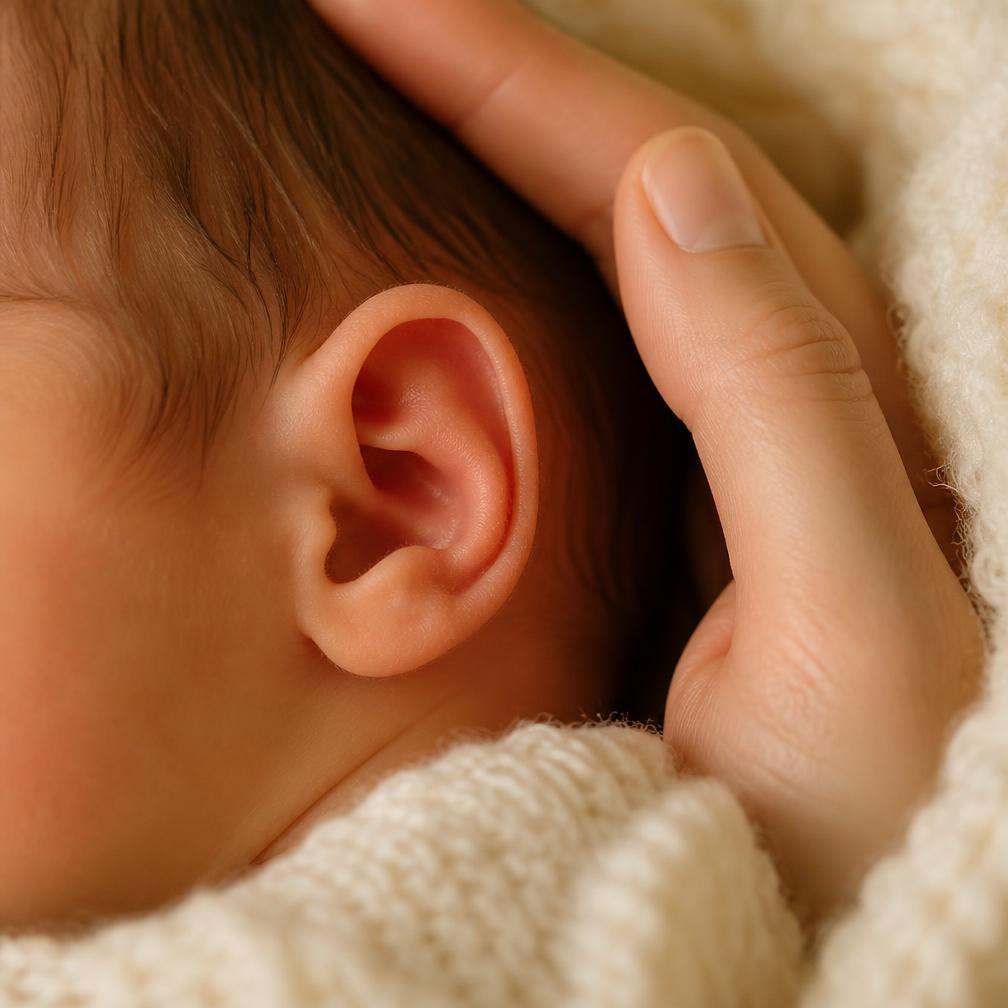
What to expect on the day
No pain, no needles
About 2 minutes per ear
Best while baby sleeps
Reading your result
Pass
Your baby's ear responded as expected. No further screening is needed right now. We'll still keep the record and check in as your baby grows, because hearing can change — so keep an eye on how your baby reacts to voices and sounds.
Refer
A "Refer" result does not mean your baby cannot hear. Very often it's fluid or vernix still in the ear canal, or a noisy or wriggly moment during the test. It simply means one ear needs a second look.
If a follow-up is needed
We schedule a re-screen, usually within two to four weeks, and remind you before it is due. If the second test also refers, we help you reach a diagnostic audiologist for a full ABR assessment and stay with you through the next steps. Your records stay with us for at least two years, so no one has to start from scratch.
Questions parents ask us most
Straight answers, no medical jargon. If something you need isn't here, just ask us when you book.
Ready when you are
Pick a time that suits your baby's routine. We'll confirm within 24 hours.